
The grammar of digital security is no longer conjugated in the conditional; the question is no longer if or when an organization will be targeted, but how many times it must confront a cyber threat. As of 2026, the cyber threat landscape has stabilized at a critically high level, fueled by intensifying global geopolitical tensions and a blurring of lines between state-sponsored actors and cybercriminal syndicates. Digital security has evolved from a technical sub-function into a structural pillar of strategic autonomy and trust, demanding direct accountability from Boards of Directors and Executive Committees.
The Proliferation of Systemic and Hybrid Threats
The threat landscape in France, the UK, and the broader EU is characterized by the industrialization of "Cybercrime-as-a-Service" and the rise of hybrid warfare.
Geopolitical Destabilization: State-affiliated actors increasingly target critical infrastructure, often utilizing "false flag" operations to anonymize the real sponsors.
Monetization over Sabotage: There is a notable shift from ransomware toward the massive exfiltration and resale of data.
Recent High-Profile Breaches: The pressure on French public services and administrations remains intense. France Travail & Social Data: Recent major incidents have exposed the vulnerability of large-scale public databases, with attackers prioritizing the volume of compromised data over immediate system paralysis.FICOBA & DGFIP: These institutions represent "representative brands of the Western bloc" that have faced increased targeting as part of broader destabilization attempts.
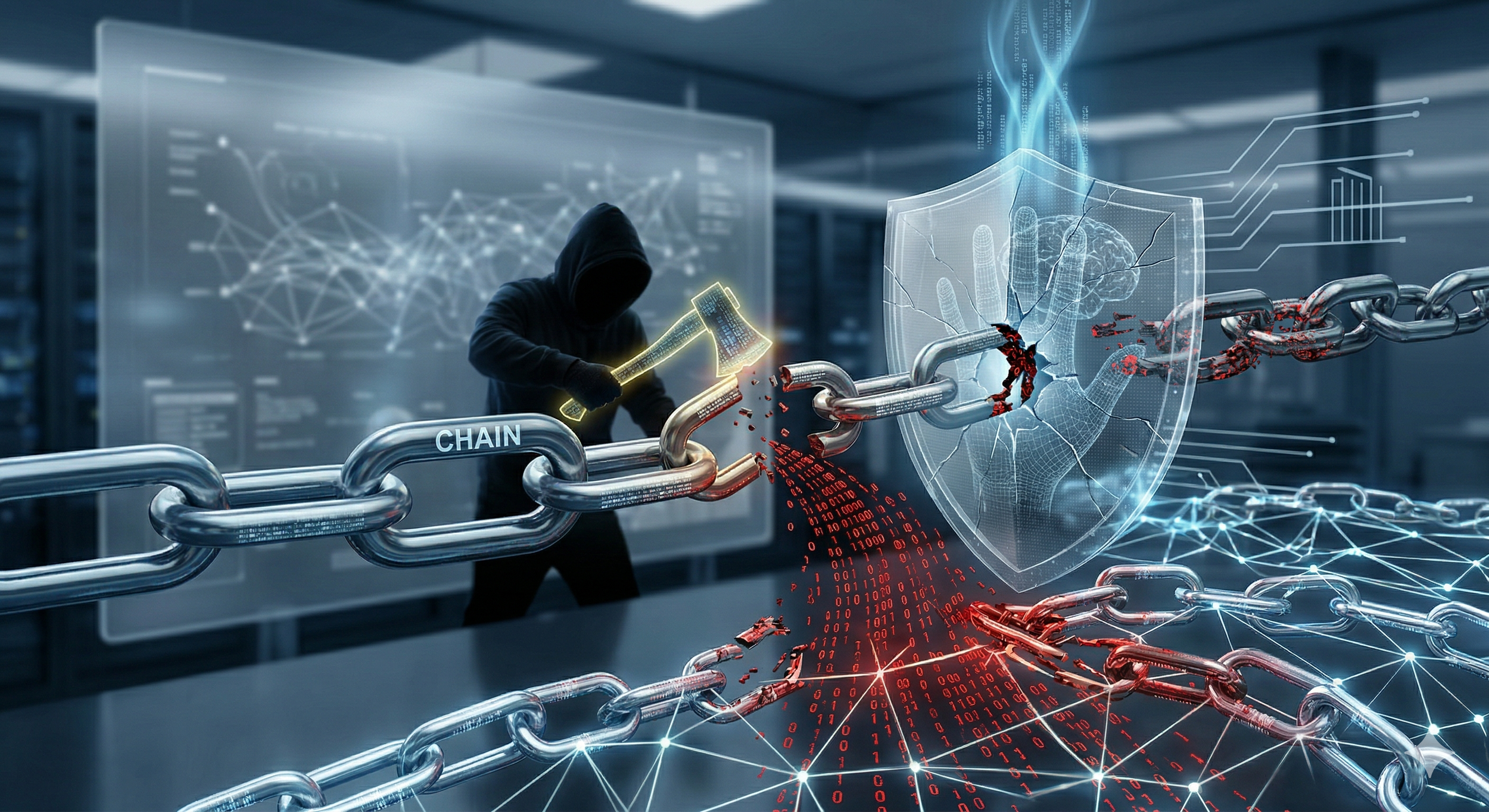
The Axios Supply Chain Attack: Supply chain vulnerabilities have become a primary vector. The recent attack on Axios (and similar breaches at Microsoft, Fortinet, or AWS) demonstrates how attackers exploit hardware edge equipment and software access keys (e.g., TruffleHog) to bypass traditional deep defenses.
Strategic Governance and the Supply Chain Imperative
Supply chains are now so deeply intertwined that a single vulnerability can have systemic consequences. Organizations must shift from a reactive "defense" posture to proactive "mastery".
Refusing Third-Party Risk Internalization: Organizations must demand proof of effective security practices from suppliers rather than relying on simple vulnerability assessments.
Contractual Mirror Clauses: It is essential to integrate "Security Assurance Plans" (PAS) that include audit rights, native security requirements, and strict incident notification delays (e.g., the 24h/72h windows mandated by NIS2 and DORA).
Strategic Decoupling: For activities in high-risk zones or unstable legal jurisdictions, a "global derisking" strategy may involve local decoupling or decentralizing critical assets to isolate operational risks.
Combatting Social Engineering: Human-Centric
Best Practices
Despite sophisticated technical defenses, many attacks succeed due to basic lapses in "digital hygiene" among employees.
Social engineering is now amplified by Generative AI, which automates and enriches phishing campaigns at scale.
Mandatory Executive Training: Per NIS2 (Art. 20.2), management bodies must undergo specific training to identify and evaluate risk management practices."Citizen IT/AI" Culture: Instead of purely restrictive policies, organizations should foster an enlightened culture where every employee becomes an active participant in collective protection.
Operational Drills: Regular training via crisis scenarios, role-playing, and hackathons is critical to moving beyond "paper governance".
Strict Identity & Access Management (IAM): Combatting social engineering requires a unified governance of identities—human, technical, and AI agents—to ensure that access is strictly controlled and monitored.